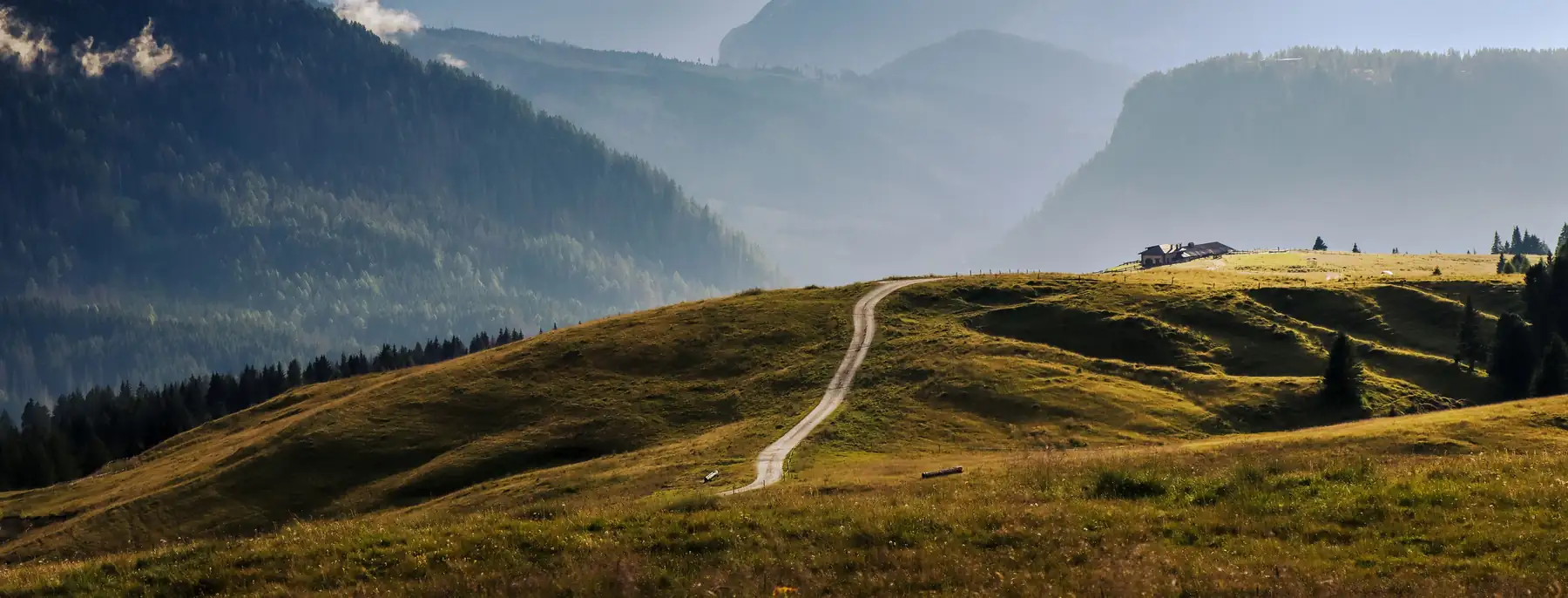
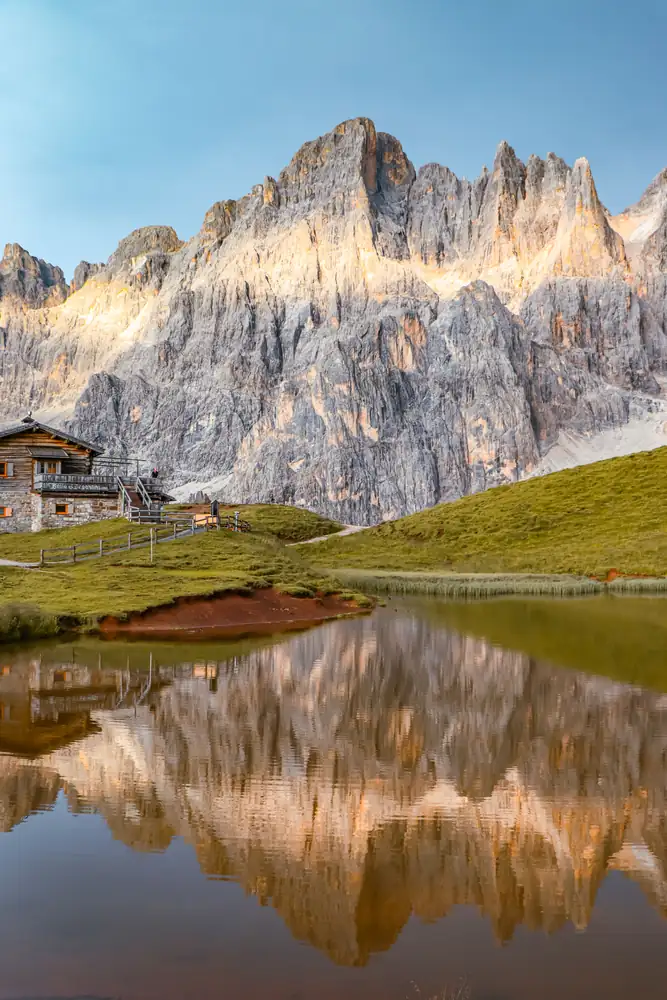
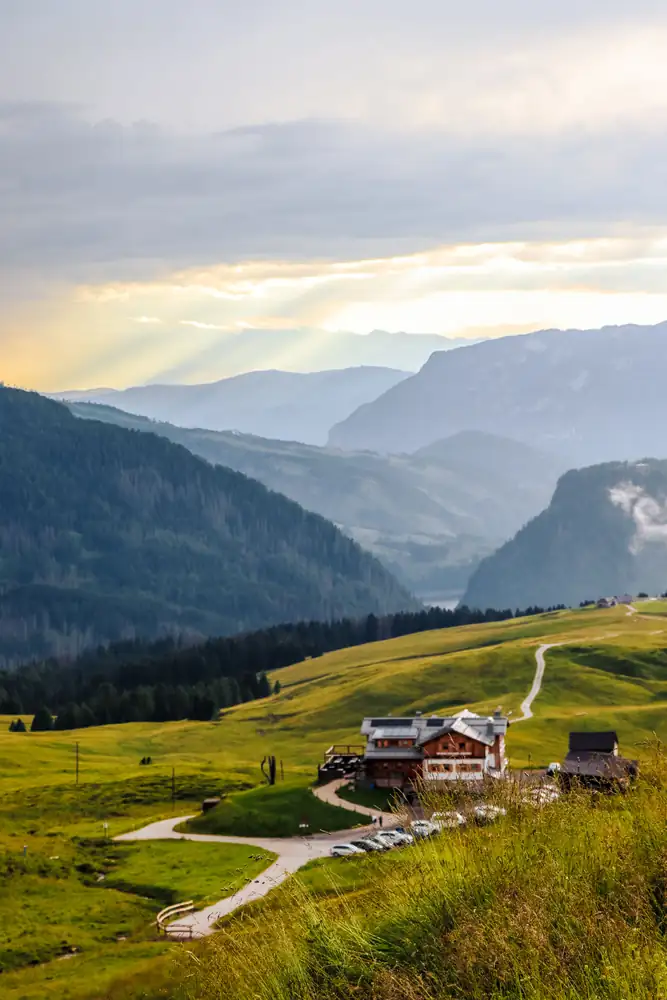
For us, it is the climb up Val Venegia to Baita Segantini, just above Passo Rolle. It leaves the SP81 at the bottom of the valley, follows it up through the larches and finishes at a mountain hut with a small lake, right under the walls of the Pale di San Martino. Then it drops you on to Passo Rolle.
Ask most cyclists for the best climbs in the Dolomites and you will hear the same list: Giau, Sella, Pordoi, Fedaia. All tarmac, all famous, all busy with cars in August. This one is gravel, and most riders pass it without turning their head.
We rode it in September. If you came here from our Instagram reel, this is the place.
Why we think it is the best
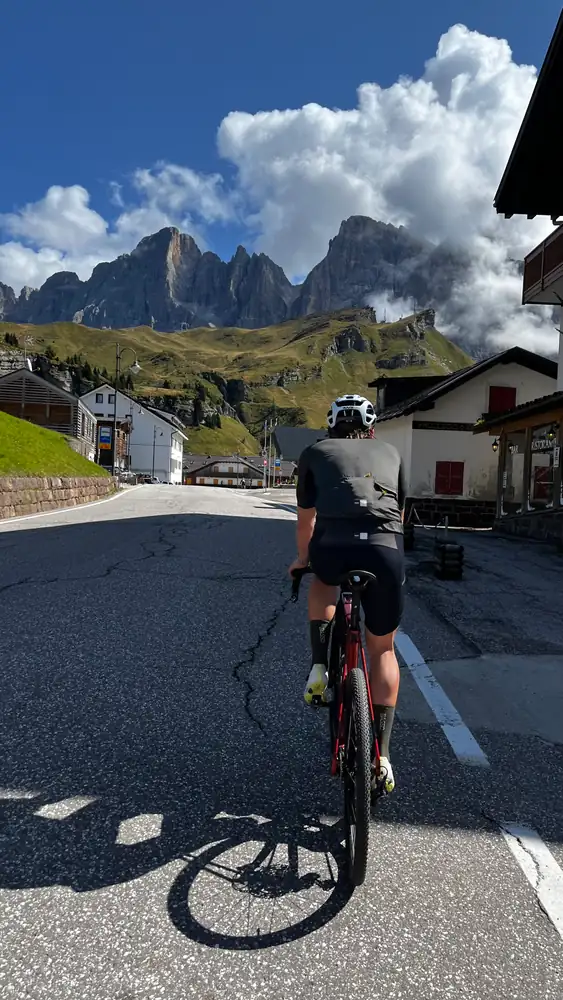
It is not the hardest gravel climb in the Dolomites, and it is not the highest. It is the one where everything you climb for is in front of you the whole way. You start in the woods beside the stream, the valley opens, and the Pale di San Martino slowly fill the windscreen. There is no traffic to listen for and no tarmac to share with motorbikes.
How the climb rides
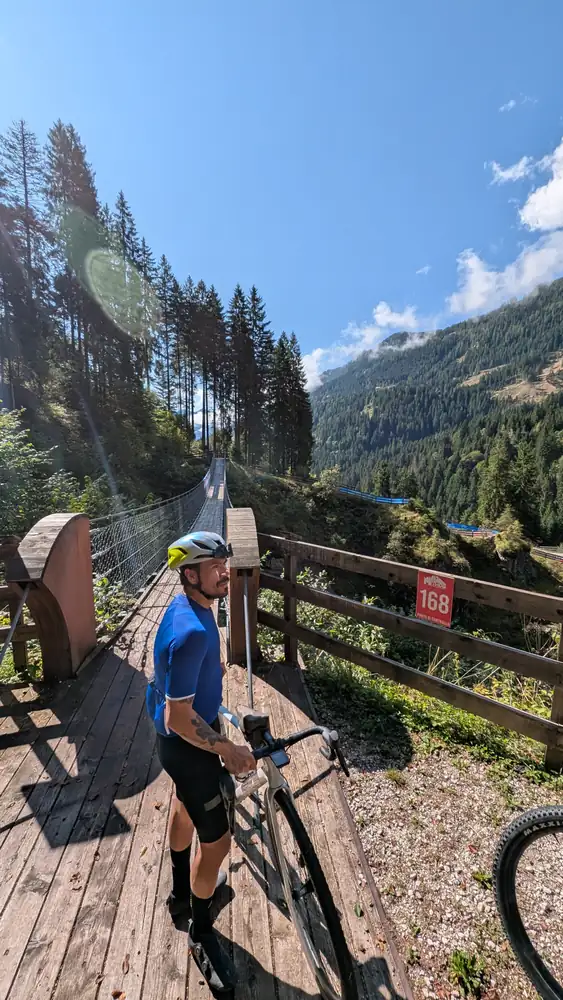
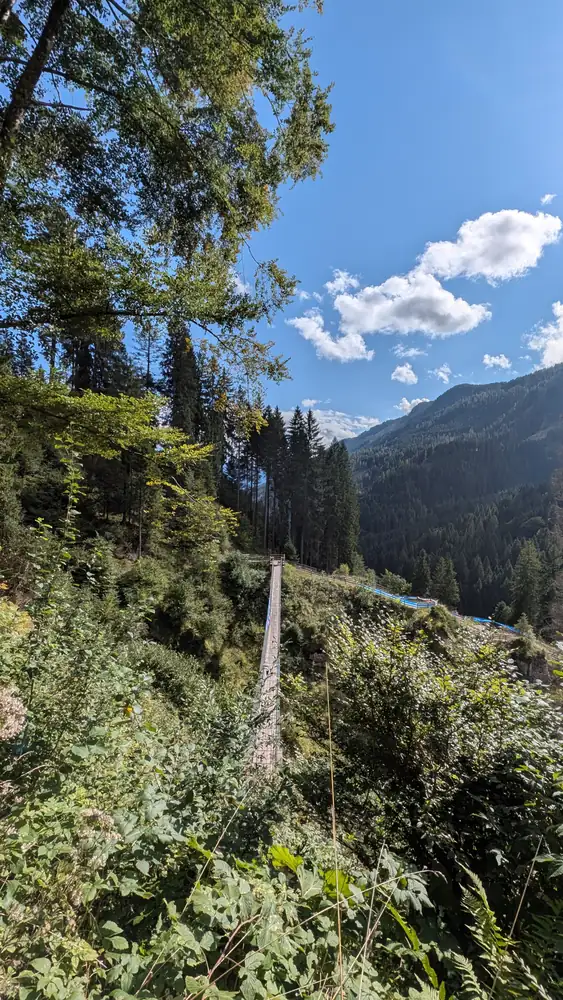
For most of the way the gradient is kind: 4 to 7 per cent on packed gravel, the kind of climb where you can hold a conversation. The valley floor is wide and green, and the track follows the water up between the trees.
The last stretch is different. The track kicks up in a series of short hairpins below the hut, and it is steep enough that a few people get off and walk. Nobody minds. You are about to arrive somewhere worth the effort.
Why so few people know it
Road cyclists ride over Passo Rolle on the SS50 and never see it. Walkers know the hut well. But there is no race, no famous segment and no road sign telling a cyclist to turn off. On a gravel bike, it still feels like a find.
At the top: Baita Segantini and the lake
Baita Segantini sits just under 2,200 metres, below the Cimon della Pala. In front of it is a small lake, and on a still morning or evening the peaks lie upside down in the water. This is the photograph that makes people look up where it is.
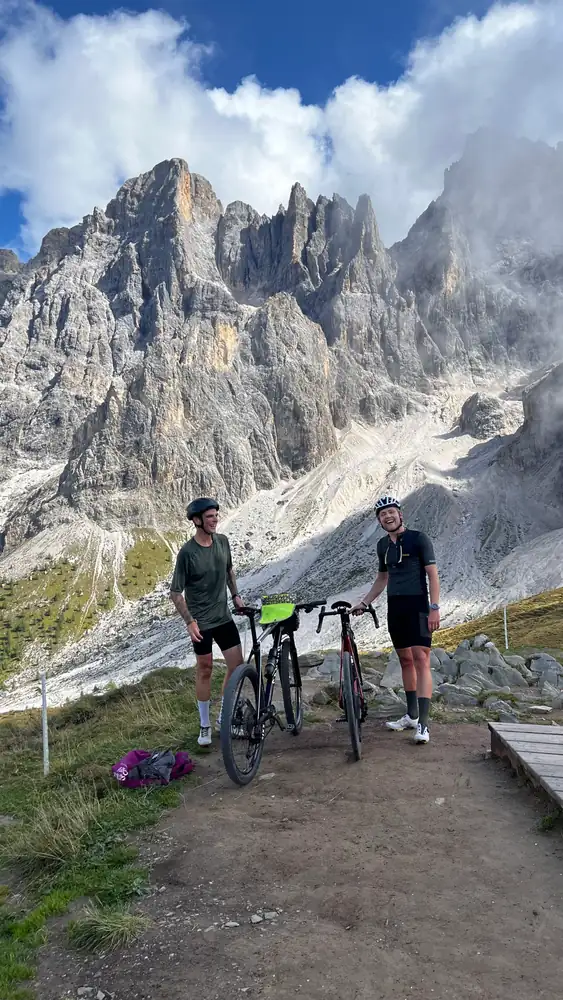
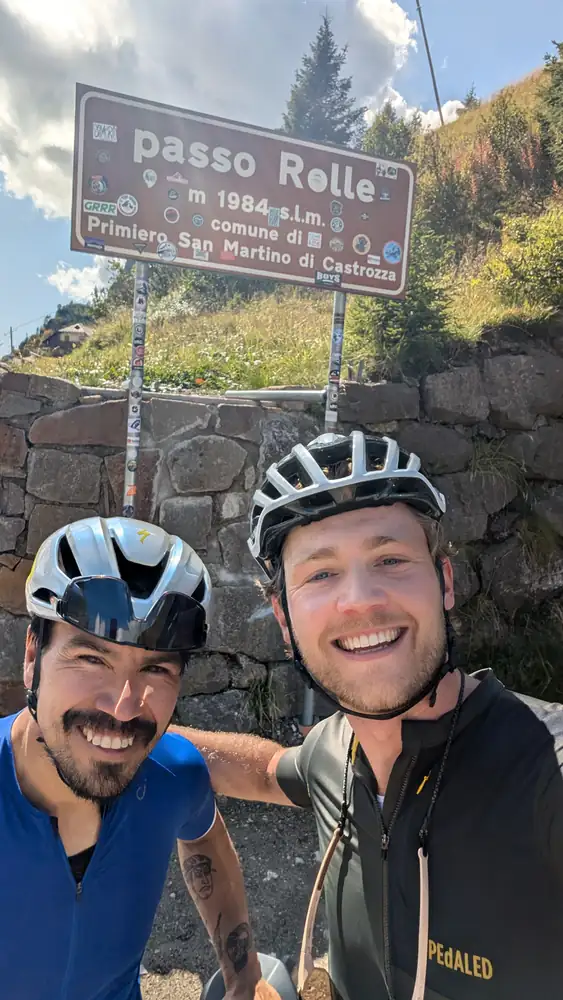
We were up there in September, and at that height it was cold enough to justify a bombardino: egg liqueur, a shot of brandy and whipped cream, served hot. Mountain logic. Then it is downhill to Passo Rolle.
How to get to Val Venegia and Passo Rolle
From Bassano del Grappa, where we live, drive north through Feltre and the Primiero valley to San Martino di Castrozza, then up the SS50 to Passo Rolle.
Our route starts where the gravel leaves the SP81, the road from Paneveggio to Passo Valles, at the bottom of Val Venegia. It is one way and finishes on the SS50 just below the pass. To turn it into a loop, ride down from Passo Rolle on the SS50 and take the SP81 towards Passo Valles back to the start.
Before you go
- Ride it from early summer to early autumn. Above 2,000 metres the season is short, and the hut is not open all year, so check before you set off.
- Take a gravel bike with low gears for the hairpins at the end. Wider tyres help on the looser sections.
- Bring a layer for the top. It was sunny when we rode it and we still wanted one.
Closer to home, we have more climbs than we can ride in a season: start with the ten roads up Monte Grappa.
Questions
What is the best gravel climb in the Dolomites?
We think it is Val Venegia to Baita Segantini, above Passo Rolle in Trentino. It is about 10 km and 500 m of climbing, almost all on gravel, and finishes at a hut with a lake under the Pale di San Martino.
How long is the gravel climb to Baita Segantini?
Our route is 10.4 km with about 500 m of climbing. The main climb is 7.5 km at 4 to 7 per cent, with a steeper finish in hairpins below the hut.
Can you ride to Baita Segantini on a road bike?
We would not. The climb is almost all gravel and the last stretch is steep and loose in places. A gravel bike is the right tool.
Where does the climb start?
Where the gravel leaves the SP81, the road between Paneveggio and Passo Valles, at the bottom of Val Venegia. It finishes on the SS50 just below Passo Rolle.
Photographs of Baita Segantini and the high meadows: Jędrzej Koralewski on Pexels. The rest are ours.