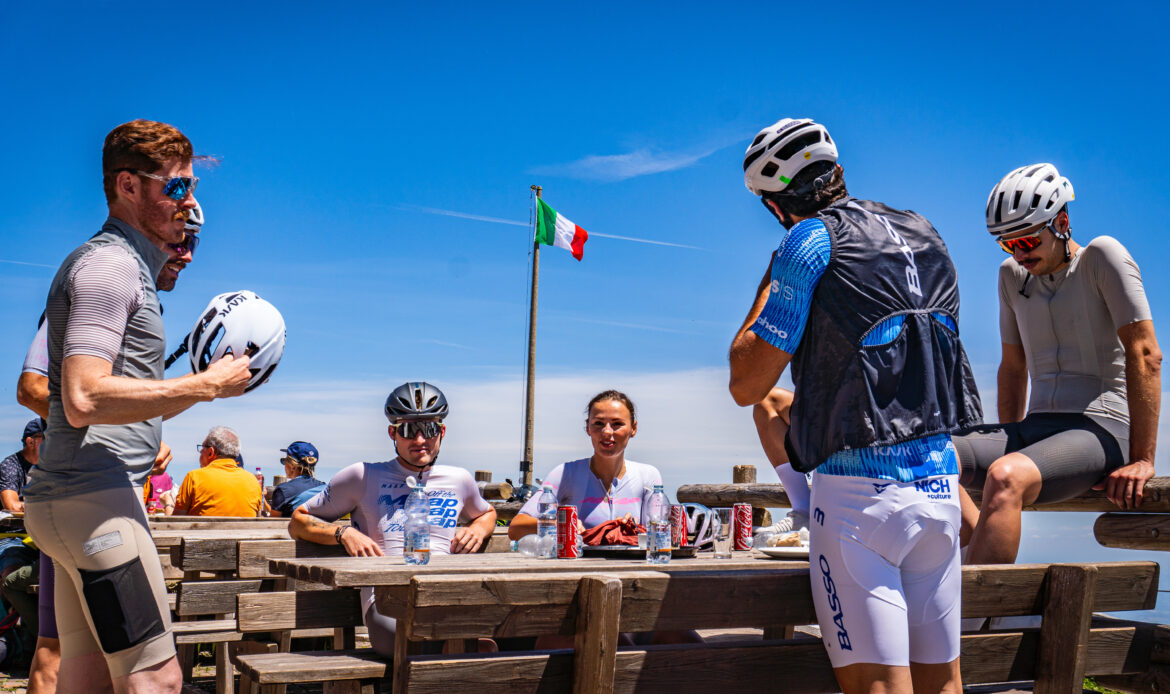



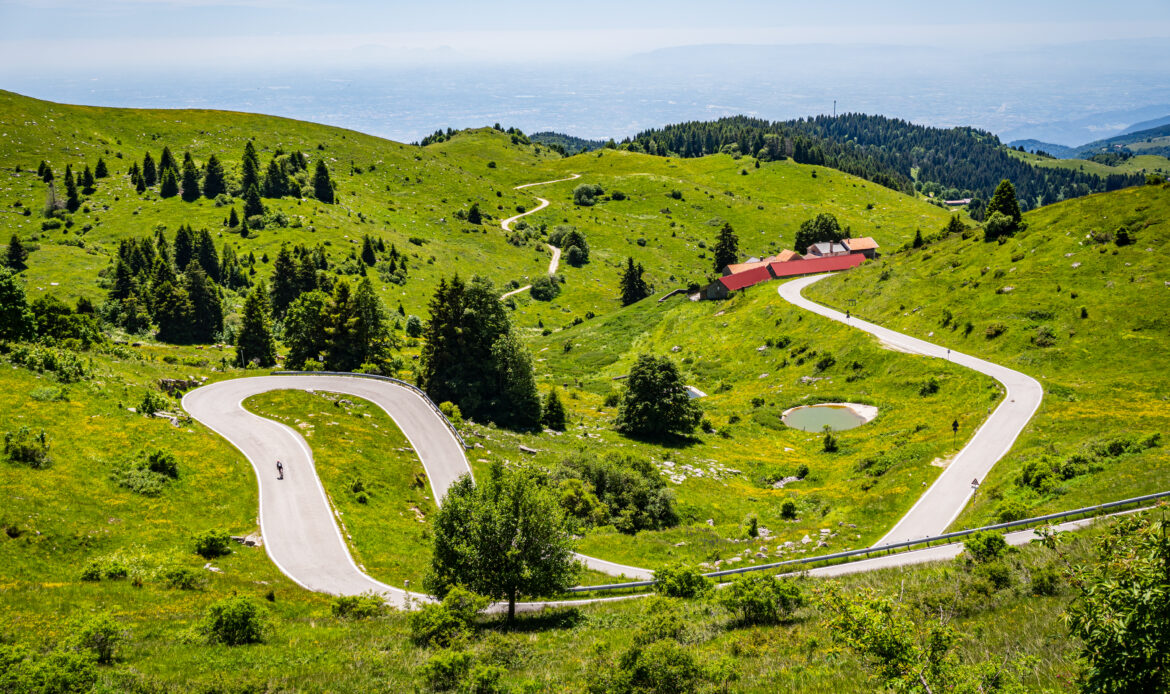
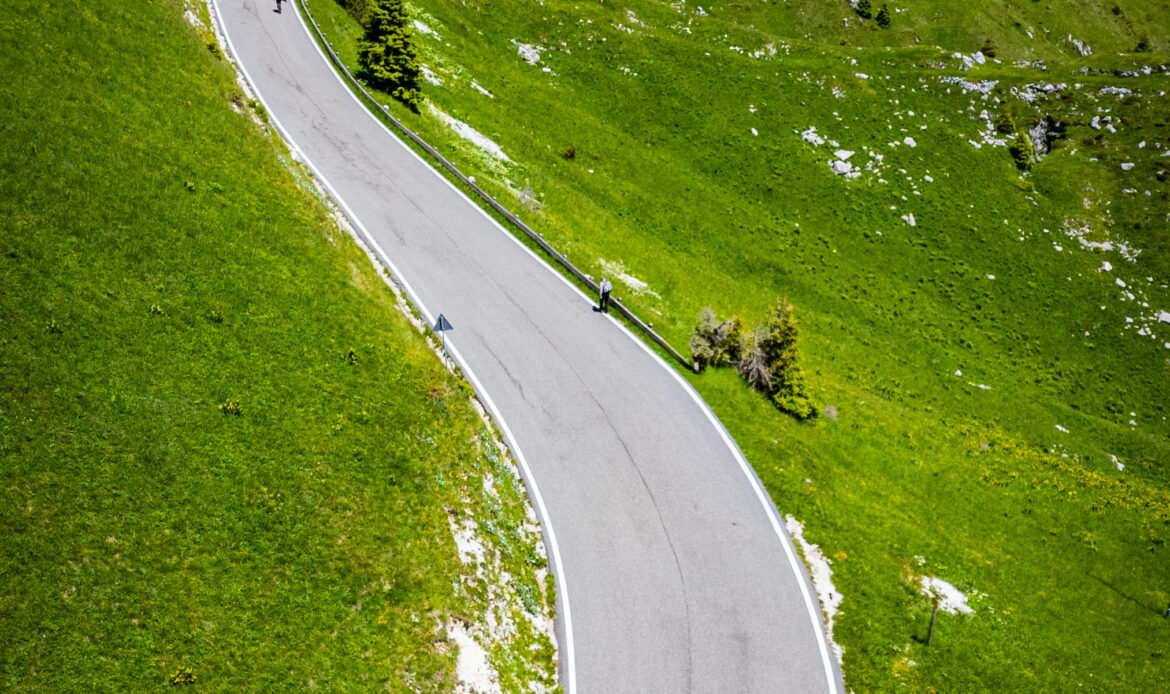
There is a question we are asked, more often than any other, by cyclists who arrive in Bassano del Grappa for the first time. They put down their bags, look up at the mountain that takes up most of the northern horizon, and ask how many Monte Grappa cycling routes there actually are.
The honest answer is that nobody is entirely sure. Pressed for a figure, a local will give you somewhere between fifteen and thirty, depending on how rural a goat track they are willing to count. The widely known and properly paved routes, the ones a cyclist with a road bike will reasonably consider, number around ten.
Ten roads. Up one mountain. This is more than most countries can claim across their entire alpine output.
For context, the famous mountain accounting
Mont Ventoux, the Provençal climb that has eaten more legs in cycling history than perhaps any other, has three sides. Bédoin. Malaucène. Sault. Three. That is the number that has built a hundred years of mythology.
The Stelvio Pass, the highest paved road in eastern Alps cycling, has three approaches as well. Bormio, Prato, and the Umbrail Pass which limps in from Switzerland.
Alpe d’Huez, the climb that defines the Tour de France in the popular imagination, has one famous route. One.
The Galibier has two. The Tourmalet has two. The Mortirolo, depending on which side you are willing to call legitimate, has two or three.
Add the famous routes up those six legendary climbs together and you reach about fifteen. Monte Grappa, on its own, will offer you ten before the locals have stopped suggesting more.
Why so many
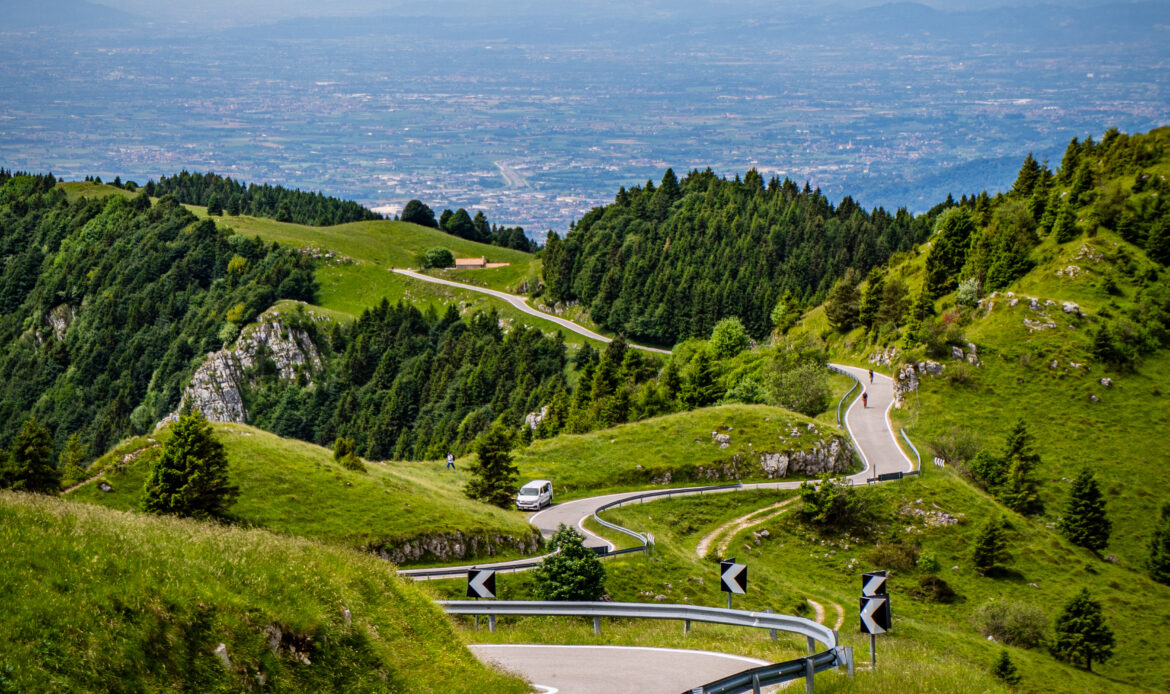
The reason Monte Grappa has so many roads up it is also the reason almost nobody outside northern Italy understands what the mountain is. It is not, strictly, an alpine climb in the way the famous ones are. It is a strategic peak from the First World War, defended at appalling cost in the late autumn of 1917 and held against the Austro Hungarian advance through the winter of 1918. To hold it required moving troops, mules, artillery and supplies up its flanks from every conceivable angle. So they built roads. Many roads. Most of them are still there.
This is why a ride up Monte Grappa, on a road nobody else seems to be using, is often a ride up a paved military road from 1917, with hairpins cut by soldiers who had no idea they were producing some of the finest cycling infrastructure in Europe. There is also the matter of the partisans in 1944, who used the same roads in the other direction. Most of the routes have a small monument near the top, and the gravity in those monuments is real.
The character of the Monte Grappa cycling routes
We are not going to list all ten here. There is a more useful and a less useful way to know Monte Grappa, and the less useful one is to consume it as a checklist.
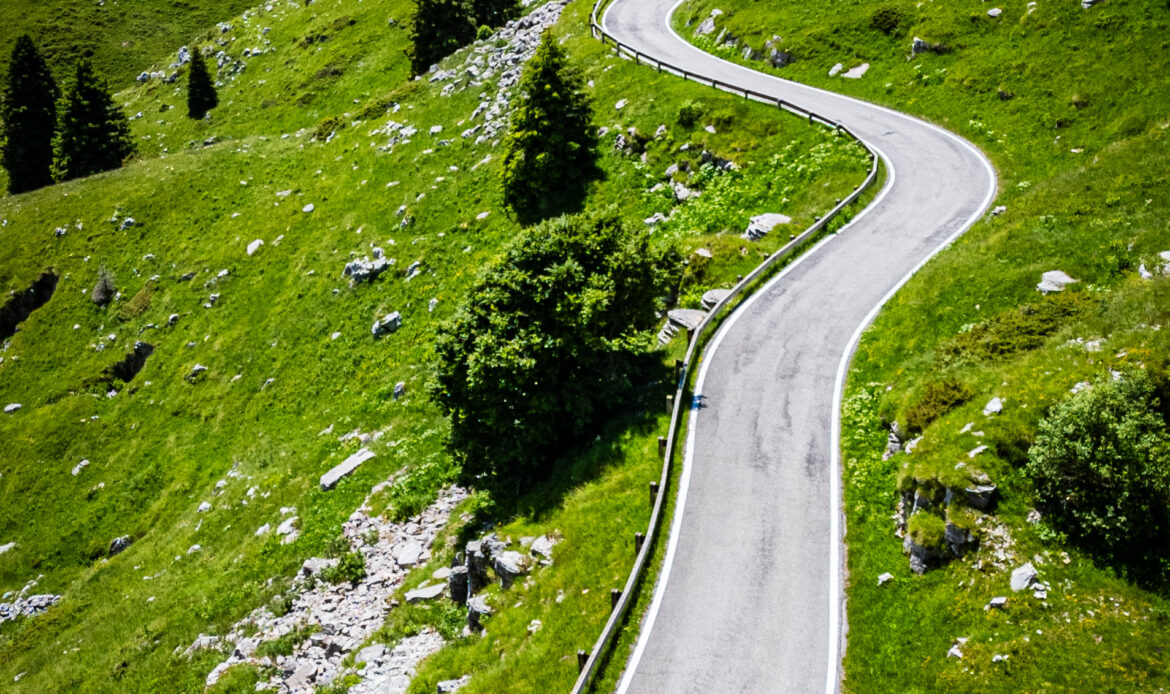
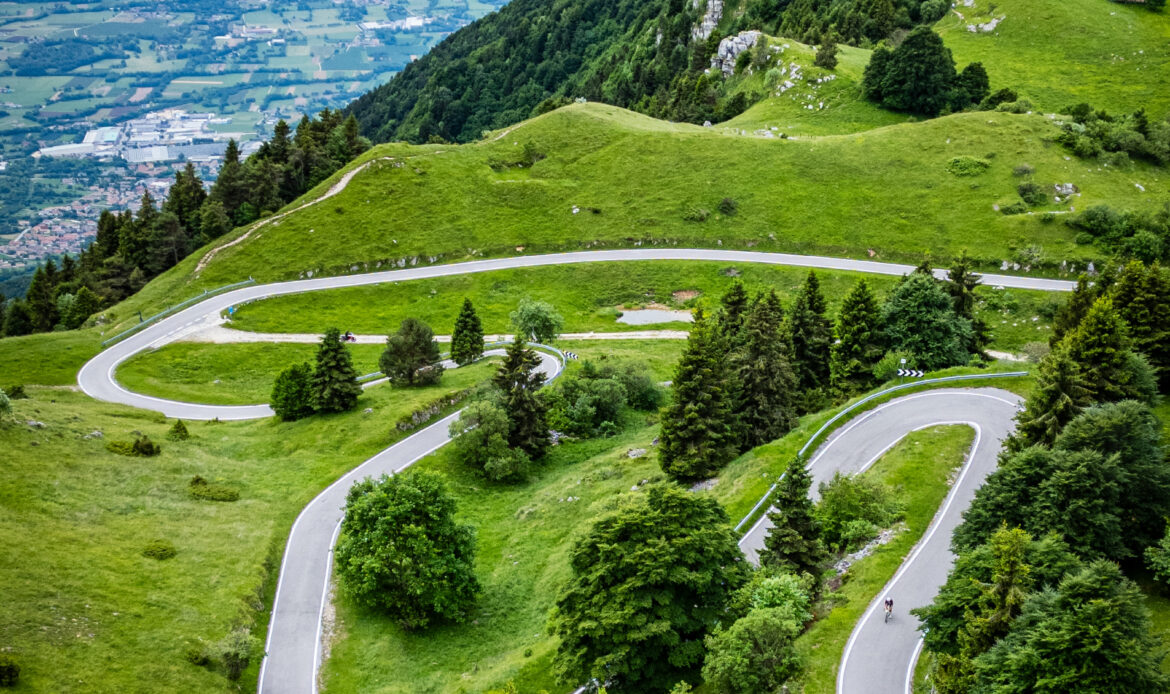
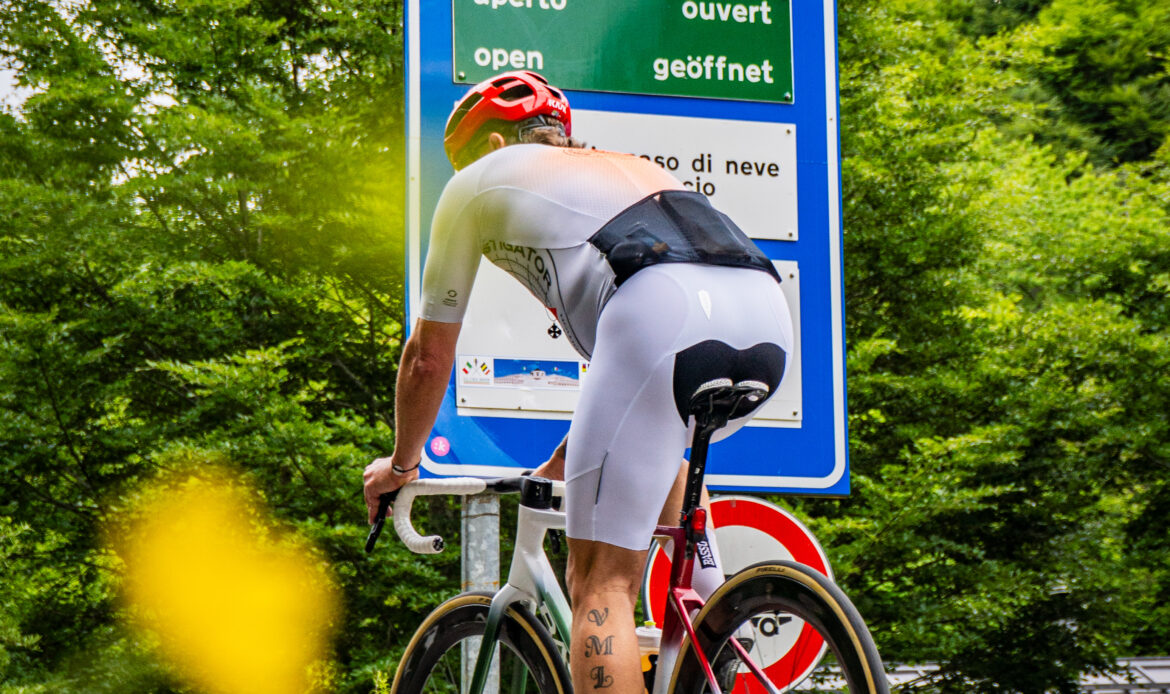
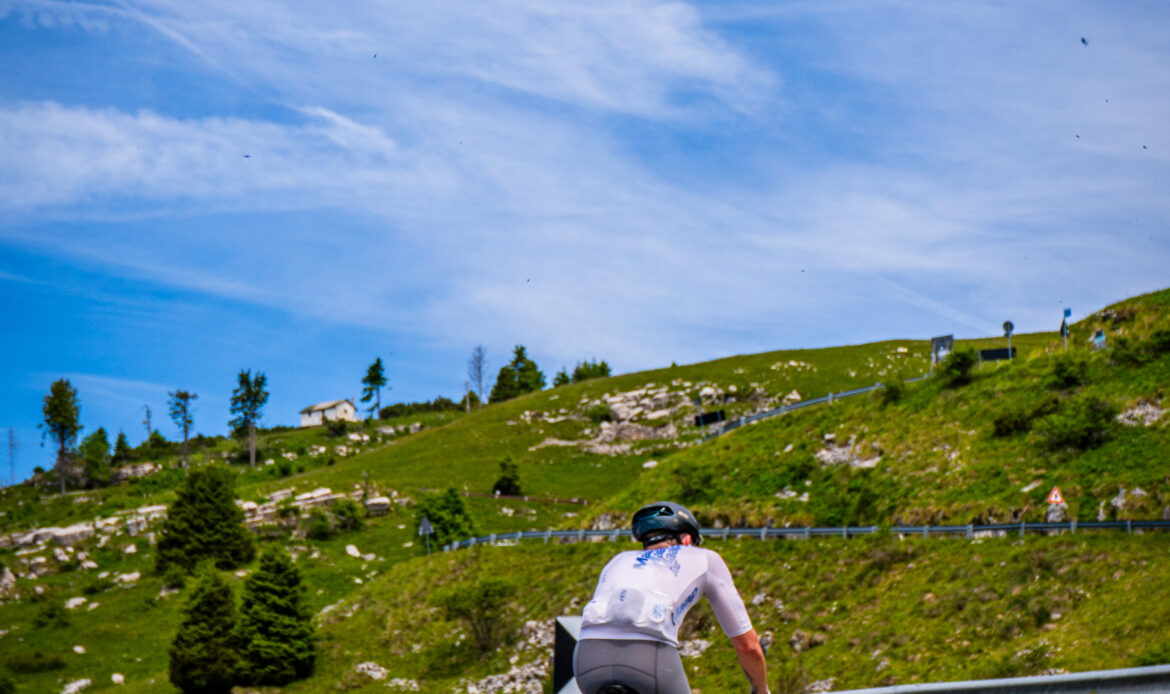
What we will say is that the climbs are unusually varied. The Cadorna ascent from Romano d’Ezzelino is long, exposed, and the closest to what a cyclist arriving from the Stelvio will recognise as a “real” climb. The Semonzo side, by contrast, has the steepest sustained gradients on the mountain and is where serious club cyclists tend to go to suffer in private. There is a tougher route from the Possagno side, where you can climb past the studio of Antonio Canova (yes, that one) and tell yourself the day is about sculpture as much as cycling. And there is at least one route, from the Caupo side, which feels for long sections as if it has been forgotten by both the map and the asphalt budget, and is consequently empty in a way that the famous climbs of Europe almost never are.
The thing the routes share is a view from the top. The summit cross at Cima Grappa looks, on a clear day, toward the Adriatic to the south, the Dolomites to the north, and Venice if you know where to look. There is a small bar. There is a war ossuary. There is very rarely a queue for anything.
The day Ben rode all ten
Ben, in the summer of 2026, decided he would ride all ten of the recognised climbs in a single day. He started before sunset on a Friday night, drank an unreasonable number of espressos, and was helped through the last two by the kind of stubbornness that comes from already having ridden the other eight. The total was somewhere north of eighteen thousand metres of climbing, which is roughly the same as a double-Everesting challenge some cyclists do as their season defining day. Except this was on one mountain, in one province, with the same view from the top each time.
We mention this not as a feat to repeat. Almost no guest of ours has expressed the slightest interest in repeating it. We mention it because the only honest way to understand Monte Grappa is to ride it more than once. At a casual conservative estimate, you will need eight further visits to begin to grasp what is here.
The Grappa Odyssey
This year, a friend of ours is running the first edition of an event called the Grappa Odyssey, designed to give cyclists who do not have a spare summer the chance to ride a meaningful selection of the ten climbs in a single day, with the support, the food, and the company that makes it a celebration rather than an examination. We are not the organisers. We are admirers. It is the kind of event we wish more regions had the temperament to host. If you are the kind of cyclist who reads this sentence and finds yourself reaching for a calendar, the event will be findable online.
So, the answer
The question we began with was how many roads lead up Monte Grappa. The only honest answer is that there are more than you have time for.
The legendary mountains of European cycling generally offer you one truly memorable day, and that day is usually shared with several hundred other cyclists looking for the same memorable day.
Monte Grappa offers you ten, in relative privacy, with a view from the top that almost no one we have ever brought here has expected.
If that interests you, you know where we are. See our best-selling cycling tours from Bassano del Grappa.